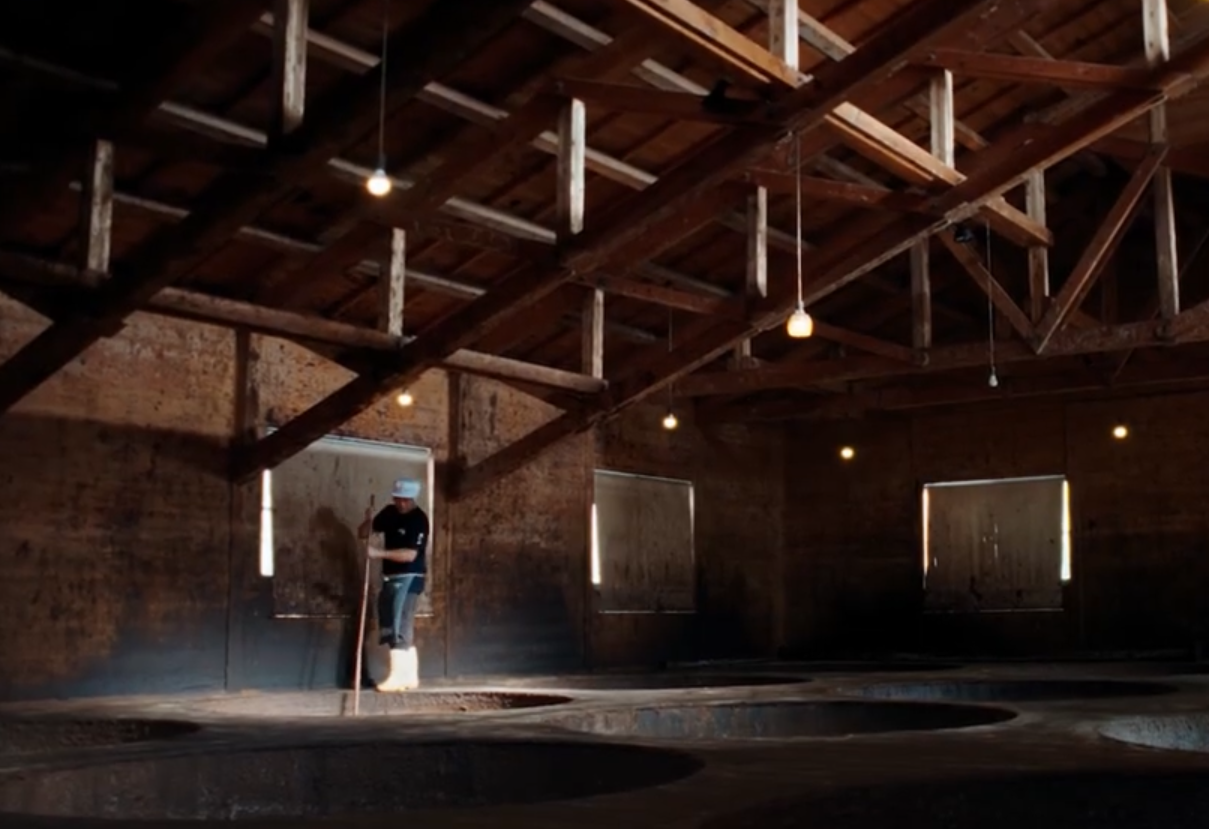
To enter the barrel room is to enter a cathedral of fermentation.
The Origin
The Cedar Lungs
A kioke barrel breathes with the seasons of Saitama. Within its porous walls, house microbes fight for dominance and leave their signature on every future batch.
The Ritual
Two Years of Silence
Modern soy can be accelerated in weeks. Kioke soy is earned by holding the mash through heat, cold, and microbial succession without forcing it into chemical shorthand.
The Precision
The Geometry of Glaze
The barrel changes the sauce so thoroughly that application becomes part of the craft. You can season a steak or brush sushi with a precision that industrial soy simply cannot support.
The first revelation in the barrel room is that nothing about it feels modern. The air is quieter. The wood smells active. The vessels look less like equipment and more like infrastructure inherited from another moral system, one where patience was not a luxury but a requirement of taste.
That is what makes kioke awakening such a useful phrase. You are not waking the barrel itself. You are waking your own understanding of what soy can be when it is formed by environment instead of shortened by chemistry. Once you smell the room, industrial soy starts to feel oddly synthetic even before it hits the tongue.
The barrel matters because it stores more than liquid. It stores the memory of previous ferments, the weather of prior years, and the house-specific microbial population that keeps each new batch connected to the last. That is why the result feels less like a formula and more like lineage.
When cooks talk about Shogun as a finishing sauce, this is the story sitting underneath the bottle.
“Soy is not a condiment. It is a biological signature.”
01
Build the Room
Protect the vessel and the ambient ecology first.
The barrel room is part of the process, not just the background.
02
Hold the Cycle
Let the mash move through seasonal change.
Time is not wasted when biology is still working.
03
Respect the Output
Season with the smallest effective quantity.
A well-formed soy should not need to shout.