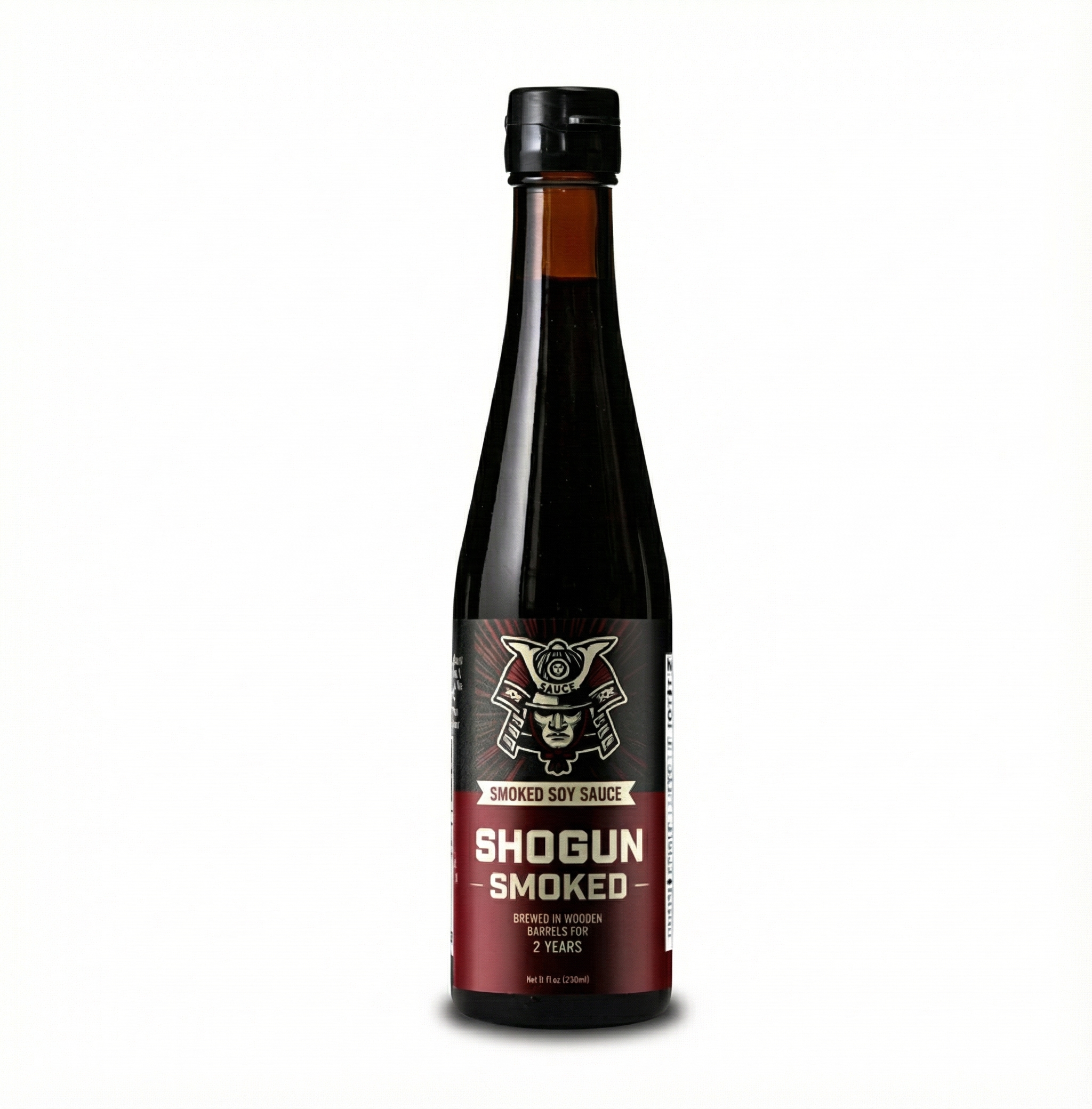
If the glaze tastes louder than the pit, you lost the cook.
The Bark
Leave Structure Intact
A good brisket bark already carries salt, smoke, collagen, and rendered spice. Ember Smoke should tighten that structure, not soften it into candy.
The Timing
Late Heat Wins
Applying smoked soy too early burns the sugars and muddies the smoke. Applying it late gives you shine and aroma while keeping the bark dry enough to bite clean.
The Extension
One Bottle, More Surfaces
Because the finish is savory instead of sticky, the same bottle moves from brisket to mushrooms to pork belly without reading like generic barbecue glaze.
Ember Smoke is most valuable when the pit is already doing its job. The brisket should arrive with real bark, rendered fat, and a smoke profile that can stand on its own. That is the only time the bottle has something to sharpen instead of rescue.
Think of the soy as a finishing lacquer with a narrower register than barbecue sauce. It can bring back sheen, deepen the crust, and throw cedar-char aroma into the air without making the meat taste candied. But it only works if you stay disciplined about timing.
This is why late application is non-negotiable. The sugars in the bottle are an asset only when they set. Push them too early and they become the story. Push them at the end and they disappear into the bark in the best possible way.
The same logic makes Ember Smoke unusually useful beyond brisket. It can finish mushrooms and pork belly with the same pit-born profile, which means the bottle multiplies instead of narrowing your menu.
“Glaze should amplify the bark, not bury it under sugar.”
01
Warm the Soy
Loosen Ember Smoke with a little rendered fat over low heat.
You want elasticity, not a watery brush.
02
Glaze Late
Apply during the final stretch of the cook.
That gives the lacquer time to set without scorching.
03
Refresh Off Heat
Finish with a final, lighter pass after the pit.
The aroma reads cleaner when the bottle gets the last word.